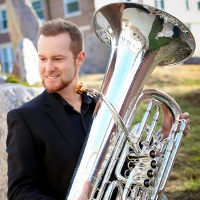

It's a rare situation when a conductor really knows how to "talk tuba" and understand fully the sublties of the size of the horn. The obvious is that many are scared when they see a BAT. But in reality, they may have been turned off by a blatty sounding smaller horn that simply had too much edge. They then transfer this sound image to the BAT and believe it will be just as bad only bigger and more offensive.bloke wrote:I just don't recall any music director or choir director or community band director (hired for a rehearsal-concert / regulars-out-of-town situations) or small combo leaders or brass quintet colleagues EVER suggesting to me that I bring or should-have-brought any-tuba-in-particular.MartyNeilan wrote:The majority of time I have brought a smaller tuba in recent years (college/community orchestra, large church orchestra) the bigger tuba was always requested.
The BAT will do whatever you want. I find that the softs are not just "soft" but actually rather mysterious and compelling with a depth of character. Part of that is the harmonic complexity of the larger taper.
I think I have seduced our orchestra conductor in believing in the BAT. I've made an extra effort to present the soft playing with an obvious air of elegance and color. It's pretty normal to expect that the louds will be huge, when necessary.
When he cues the bones and tuba these days, I see him take a big breath and puff up like an ol' bull frog. I think he likes what he hears. It's my job to see that he does.
My take is, if you want to keep using it in an ensemble, then playing it with ultimate musicianship will likely win you some points. It is only a tool in the hands of a craftsman musician, and it must be mastered.