Page 1 of 2
Rotary vs piston
Posted: Wed Apr 05, 2017 7:45 pm
by proam
I am curious about what the tuba world thinks about rotary vs piston valves.
As a background, I am coming to tuba from the trumpet. US orchestral trumpeters (many European trumpeters use rotary instruments almost exclusively) tend to use rotary trumpets only on certain works where it is deemed that the different rotary sound is more appropriate.
Do tubists ever pick an instrument based on a sound characteristic of the rotary or piston valves? Do you all perceive a difference in sound attributable to rotary vs piston valves?
I have a Conn 5J and I am ashamed to admit that those valves take a lot of effort to depress! I am a weakling ... my hand gets cramped playing that thing. As I look and lust over other tubas, perhaps a C, I read about highly-respected piston valve models but find myself thinking I might prefer rotary valves.
Do you all ever think piston vs rotary or just consider the horn as a whole and the valves are just there?
-- Joe
Re: Rotary vs piston
Posted: Wed Apr 05, 2017 8:18 pm
by roweenie
Maybe you simply need lighter springs....
Re: Rotary vs piston
Posted: Wed Apr 05, 2017 10:08 pm
by proam
roweenie wrote:Maybe you simply need lighter springs....
Well, that's a good idea. Maybe I can lighten the action on the existing springs ... I know you can pinch them between a finger and thumb and sort of massage them to do that.
lost wrote:For me rotary valves take way more hand strength then piston valves.
Interesting, I would not have thought that.
Thanks!
Re: Rotary vs piston
Posted: Thu Apr 06, 2017 12:20 am
by swillafew
I played heavy, noisy pistons in high school, and haven't played them since.
Re: Rotary vs piston
Posted: Thu Apr 06, 2017 8:00 am
by Three Valves
I just discovered that the condensation in my rotary tuba all runs thru the valves and to one water key.
No slide removal, no tuba spinning.
Rotary wins!!
Re: Rotary vs piston
Posted: Thu Apr 06, 2017 8:14 am
by Michael Bush
Brainstorming a list of professional players who use a piston contrabass tuba alongside a rotary bass tuba suggests to me that it really doesn't matter very much.
Re: Rotary vs piston
Posted: Thu Apr 06, 2017 8:37 am
by proam
Sorry about bringing up a tired, old subject, but I thought maybe my spin on it was a little different.
I mostly play piston trumpets, but do have a rotary C for certain occasions. If everything were the same about my piston trumpet and my rotary, they would still sound different simply due to the valves. And a rotary trumpet valve stroke is so short compared to piston it feels like your fingers are hardly moving.
I didn't know if the tuba world thought about rotary vs piston in that manner at all. Sounds like it is just instrument vs instrument and that the valves are just part of that particular instrument choice.
Thanks!
-- Joe
Re: Rotary vs piston
Posted: Thu Apr 06, 2017 9:14 am
by Donn
swillafew wrote:I played heavy, noisy pistons in high school, and haven't played them since.
My last rotary valved tuba rattled like a bucket of bolts.
Re: Rotary vs piston
Posted: Thu Apr 06, 2017 9:47 am
by Lectron
One is superior, but I'm not telling

Re: Rotary vs piston
Posted: Thu Apr 06, 2017 10:33 am
by Phil Dawson
Try Yamaha Euphonium springs. I use them in my 3J and they work great. Phil
Re: Rotary vs piston
Posted: Thu Apr 06, 2017 11:11 am
by tbonesullivan
In terms of hand feel, my limited experience finds that rotors are smoother to use on the hands, however due to the shorter stroke, they can take more strength than a well set up piston tuba. Simply due to how they are made, piston tubas will almost always have a longer stroke. You're directly actuating the valve, so there is no way around that.
With rotors, you are acting on only the center spindle of the valve to make it turn 90 degrees. The geometry allows for much shorter valve throw, though again that all depends on the geometry of the linkage. I won't even go near the mechanical vs string linkage discussion here.
Re: Rotary vs piston
Posted: Thu Apr 06, 2017 12:13 pm
by PaulMaybery
Sometimes we forget the nature and condition of the piston or rotary valve and its attendant mechanism. Old and worn usually translates into issues. Worn pistons leak and worn rotor mechanisms rattle. Choose your poison. On the positive side, worn pistons tend to move quickly, but if you care about the sound, the thicker oil needed for the hydraulic seal slows things down. Noisey rotor linkage may or may not respond to lubrication and greasing the joints. The rotor itself should not actually touch the casing wall and hence does not wear, this leaves the bearing/spindle to carry the weight and eventually wear. A tech with experience swedging those bearings can add life to the rotor. Other techiniqes involve rebuilding the valve.
For what it is worth, there should be readily available rebuild kits for rotary linkage: from just a simple replacement of the minibal or uniball end bearings to the whole paddle and pushrod assembly. Seems like there is this clandestine procedure involved to get those parts from a manufacturer and so few technicians seem to know very little if anything about where to obtain them.
In the automobile industry there are kits for rebuilding carbuerators, pistons, break assemblies and the list goes on.
Why not some generic parts for tuba rotary mechanisms that are a cut above having to use radio control hobby parts.
Perhaps out friends at Wessex might take the lead and offer such kits for their instruments, though I doubt at this stage any of their tubas actually need that attention. The time will come however. I happen to have 3 Wessex instruments with rotary valves and all of them work great: smooth, fast and quiet. I find them luxurious to play. But how long will that newness last? And when the time comes I would love to be able to simply have access to a rebuild kit and return the horn to that well fitted 'new like' valve assembly.
Re: Rotary vs piston
Posted: Thu Apr 06, 2017 5:01 pm
by Lectron
ValveSlide wrote:Lectron wrote:One is superior, but I'm not telling
No, the other one is.
OMG

.....what about the hybrids.
Re: Rotary vs piston
Posted: Thu Apr 06, 2017 5:13 pm
by proam
Lectron wrote:ValveSlide wrote:Lectron wrote:One is superior, but I'm not telling
No, the other one is.
OMG
.....what about the hybrids.
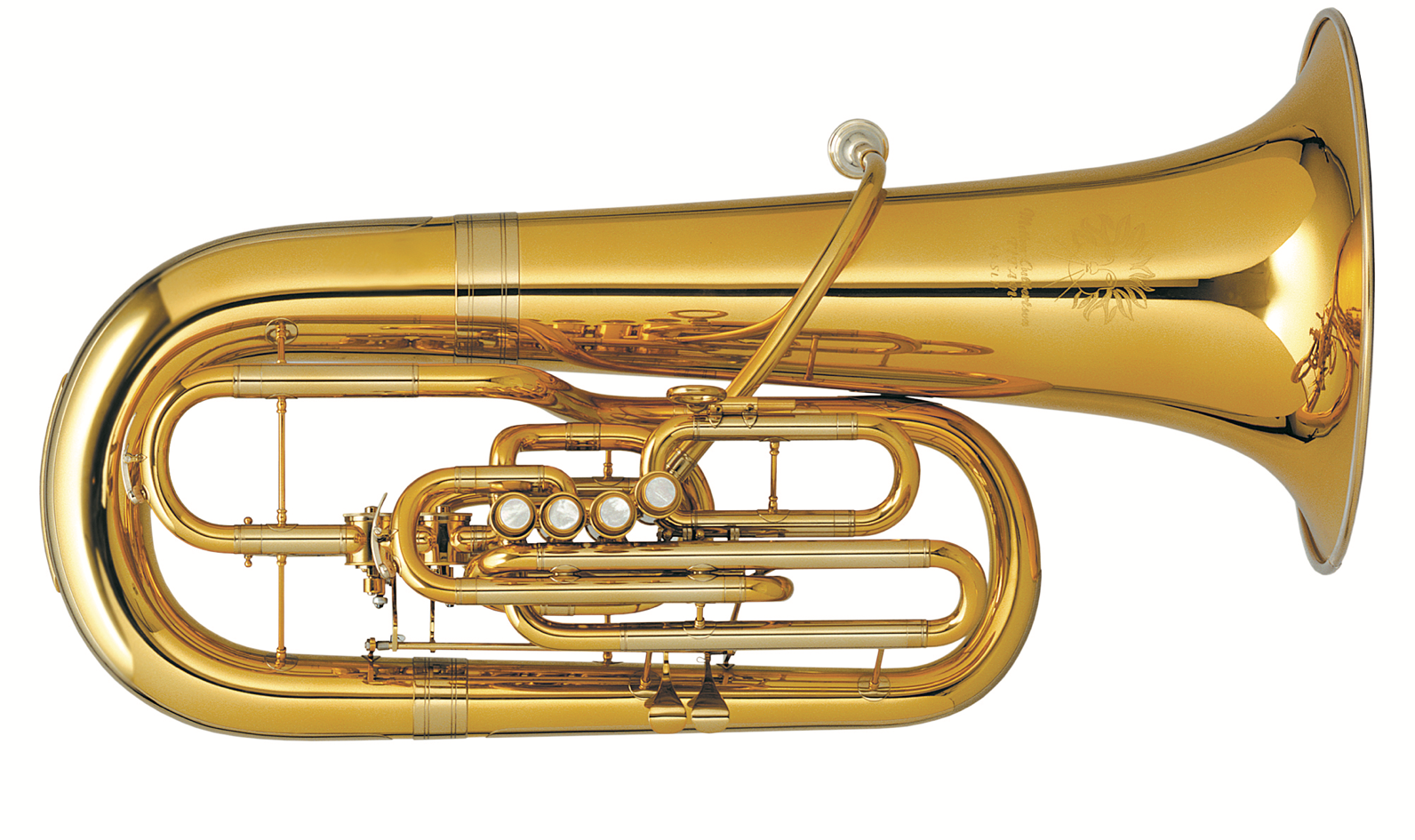
I thought you might be mentioning a top-action rotary.
Re: Rotary vs piston
Posted: Thu Apr 06, 2017 5:17 pm
by proam
Phil Dawson wrote:Try Yamaha Euphonium springs. I use them in my 3J and they work great. Phil
Thanks for the tip! Those are easy to find. -- Joe
Re: Rotary vs piston
Posted: Fri Apr 07, 2017 1:39 pm
by MaryAnn
Based on the original statement about hand cramping, I highly advise giving a rotary a good solid play test. Pistons are off limits for me for similar reasons. Just can't operate them and have zero problem with rotaries. Even with light springs. Why work yourself trying to do something that isn't the best fit when the results are all that matter?
Re: Rotary vs piston
Posted: Fri Apr 07, 2017 1:48 pm
by tbonesullivan
proam wrote:I thought you might be mentioning a top-action rotary.
I would love to see an implementation of that. The linkage would definitely require creativity, depending on valve location.
Re: Rotary vs piston
Posted: Fri Apr 07, 2017 2:36 pm
by tbonesullivan
That's interesting! It's a rotary designed to play like a piston trumpet. The change in ergonomics must be confusing for many trumpet players who play both.
Re: Rotary vs piston
Posted: Fri Apr 07, 2017 10:26 pm
by Uncle Markie
When I was in college I thought rotary valves were worth a try. While in college I went into the music business with one full time job after another, freelancing in New York City, etc. The rotary valves (which have improved much since then) drove me nuts - too many adjustments, things coming loose, bumpers, etc. Plus they were fragile. I did very little work where I counted lots of rests and came in big with the trombones - most of my work consisted of nearly constant playing - dance bands, jazz bands, saloon bands, circus bands, outdoor work, concert bands and once in a while brass quintet. I switched to piston valved instruments and have never looked back.
For me the difference was pretty simple - if something gets into your valves on a piston horn - on your break your take the caps off, pull a rag through the casing, wipe down the and oil the valves, put it back together and you're back in business. With a rotary valve tuba you either learn to carry a few little tools around with you or it's off to the repair shop.
Many other fine players I've known had no problem doing much the same work with a rotary valved tuba - however, the players I tried to emulate as a young musician - Don Butterfield, Harvey Phillips, Lew Waldeck, Johnny Evans, Country Washburn, Joe Tarto - all used piston valve tubas because of the simplicity and dependability.
A Conn 5J is a great small tuba - try lighter springs, cleaning the valves and casings once in a while and enjoy the remarkable intonation that horn usually has.
Take out your Herbert Clarke Setting Up Drills and play them on tuba to where you're getting clean half-step separation on those chromatic runs and your valve technique should improve too.
Good luck to you!
Mark Heter
Re: Rotary vs piston
Posted: Sat Apr 08, 2017 11:53 am
by TUbajohn20J
tbonesullivan wrote:proam wrote:I thought you might be mentioning a top-action rotary.
I would love to see an implementation of that. The linkage would definitely require creativity, depending on valve location.