Page 1 of 1
Not Tuba related
Posted: Fri Jan 19, 2018 10:44 am
by Dubby
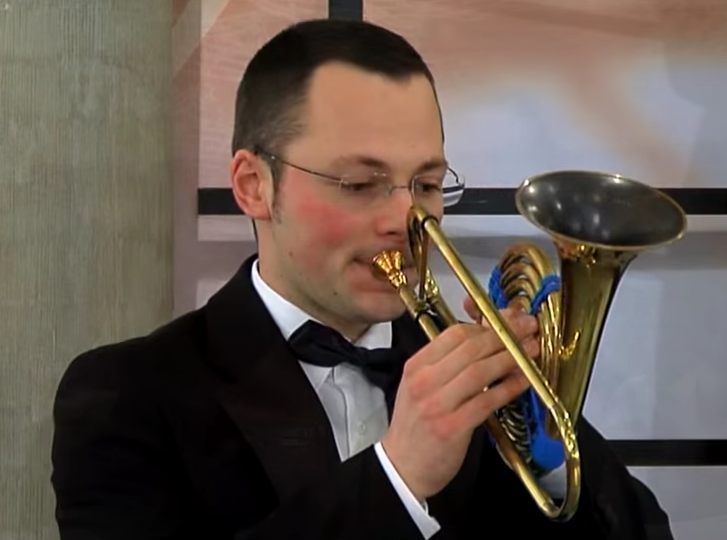
But anyone know what the brass instrument in this video is?
https://youtu.be/K1ejInL_jdY" target="_blank
Re: Not Tuba related
Posted: Fri Jan 19, 2018 10:58 am
by bone-a-phone
I think you'd call that a natural horn with a slide, or possibly a slide horn.
http://www.public.asu.edu/~jqerics/keyed_slide.htm" target="_blank
Re: Not Tuba related
Posted: Fri Jan 19, 2018 11:49 am
by Dan Schultz
Dunno. But, WESSEX needs to clone it.
Re: Not Tuba related
Posted: Fri Jan 19, 2018 1:32 pm
by MN_TimTuba
He needs to add a water key to each loop.
Re: Not Tuba related
Posted: Fri Jan 19, 2018 4:29 pm
by Three Valves
You all laugh, but I bet he would sell tens of them!!
Re: Not Tuba related
Posted: Fri Jan 19, 2018 5:12 pm
by ppalan
Not sure exactly but it bears a strong resemblence to this:
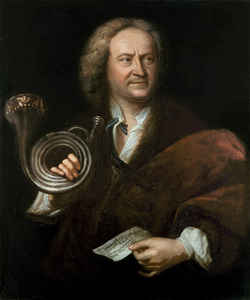
the trumpet used by Gottfried Reiche in Bach's orchestra
Pete
Re: Not Tuba related
Posted: Sat Jan 20, 2018 9:41 am
by Three Valves
Predictably, Laabs would attach poor Gottfried to it’s promotion without permission or compensation!!

Re: Not Tuba related
Posted: Sat Jan 20, 2018 10:38 am
by imperialbari
The score calls for a horn or alternatively the right hand of the thorough bass organ to play a tutti line. Which would be quite high for a horn.
The more common baroque trumpets were long like the cavalry trumpet and had 1 or 2 loops depending on their pitch, mostly F, D, or C.
Then there was Reicha’s coiled trumpet.
For doubling the choir sopranos there was a rare tromba da tirarsi, slide trumpet.
This instrument here looks like a combination of the latter 2 variants. Until proven wrong I tend to doubt that it is based on a historical foundation.
The Reicha painting above here had some speculate about the finger positions of Reiche. Replicas were built with vents, where Reiche’s fingers touched the tubing. The vents helped stabilizing some pitches, so straight replicas also got vents.
However no historical instruments had vents until some post horns from the 19th century.
The short slide of the instrument here makes sense, as this trumpet only moves among its upper partials, where only a few positions are needed to make it chromatic.
Klaus