I was also wondering if anyone has any information on the piano company 'Starck'. I have an old victorian cabinet grand (some where around 100 years old) and would like to find some info on the brand. Thanks (of course i will post pics soon).
lets talk pianos
- andrew the tuba player
- 3 valves

- Posts: 489
- Joined: Fri Jun 15, 2007 5:17 pm
- Location: Some where in Arkansas
- Contact:
lets talk pianos
ok. so i was just wanting to see if any of us have some cool pianos. piano is my second favorite instrument (following tuba of course
). i love older pianos and newer ones too. So if you get some spare time and are intersested post some pics of pianos.
I was also wondering if anyone has any information on the piano company 'Starck'. I have an old victorian cabinet grand (some where around 100 years old) and would like to find some info on the brand. Thanks (of course i will post pics soon).
1969 Mirafone 186 BBb
1965 Conn 20J
Olds fiberglass Sousaphone Project- for sale
Epiphone Thunderbird Bass Guitar
Cremona 3/4 upright bass
1965 Conn 20J
Olds fiberglass Sousaphone Project- for sale
Epiphone Thunderbird Bass Guitar
Cremona 3/4 upright bass
- tubadood5150
- bugler

- Posts: 34
- Joined: Mon Aug 13, 2007 7:20 pm
- Location: ohio
Re: lets talk pianos
I have an old Steinway baby grand that my grandpa used to have. It's an heirloom. Pretty awesome piano in its time....but, it needs about $15k in restoration....it spent about ten years overseas in England with my uncle who recently retired from the U.S. Air Force. The moving company stored it in a warehouse on its side....FURIOUS. It's still an amazing piano.
Music Education major at Cleveland State University
In need of a good 4/4 CC with 5 valves for a really low price!
- Rick Denney
- Resident Genius
- Posts: 6650
- Joined: Mon Mar 22, 2004 1:18 am
- Contact:
Re: lets talk pianos
1887 Hazelton Brothers 6-1/2-foot grand. It had been used in a church in Fort Worth for a century, and they had restored it with new strings, pins, key tops (Grrrr!), felts, hammers, and so on. But the finish was crazed and falling off, and when they received a donation to buy a new piano (they bought a 7-foot conservatory-grade Yamaha), they used it as trade fodder. I bought it for cheap. I took a cabinet scraper and wiped off the old finish, and then replaced it with six coats of shellac. And I painted the legs black, Victorian style (I doubt the legs are original in any case). I had to rebuild the pedal rack and replace the braces--the screw holes had lost their threads and I had to made a new attachment frame.
Unlike most antique pianos, this one is tuned to A-440 and there is only one part of the keyboard that is a bit wiggly in terms of holding tune, but even though I don't have it tuned as often as I should it's still not bad. The action is a little sloppy and the repeat is not what one would expect on a modern piano, but given my dreadful skills, that's not an issue at all. It's a nice-sounding piano, and I enjoy listening to my wife play it. With the newer strings and felts, it does not at all sound like an "old" piano.
Hazelton Brothers were bought out in 1896 by Kohler and Campbell, who was just launching into the upright piano boom. And they took production out of the old shop in New York and made it a mass-produced brand. But before that, they were made in an artisan shop, and were a well-respected minor brand.
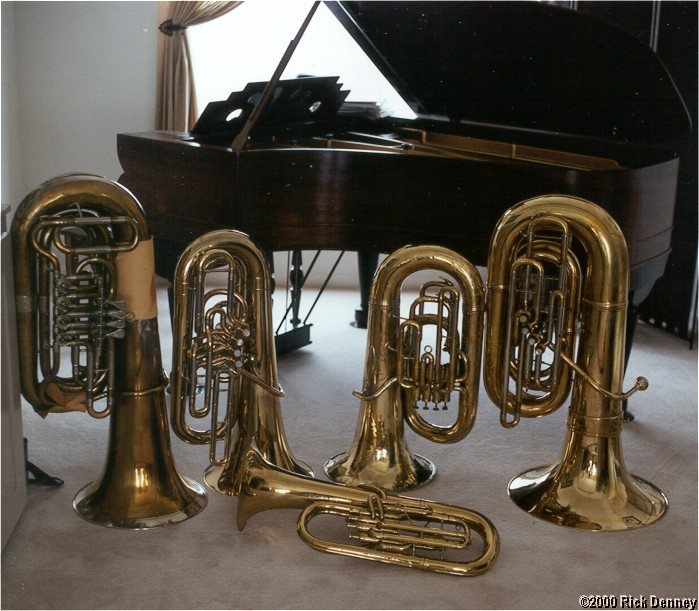
Rick "noting the sharp corner on the bent side and the 7-octave keyboard, ala the Victorian period" Denney

Unlike most antique pianos, this one is tuned to A-440 and there is only one part of the keyboard that is a bit wiggly in terms of holding tune, but even though I don't have it tuned as often as I should it's still not bad. The action is a little sloppy and the repeat is not what one would expect on a modern piano, but given my dreadful skills, that's not an issue at all. It's a nice-sounding piano, and I enjoy listening to my wife play it. With the newer strings and felts, it does not at all sound like an "old" piano.
Hazelton Brothers were bought out in 1896 by Kohler and Campbell, who was just launching into the upright piano boom. And they took production out of the old shop in New York and made it a mass-produced brand. But before that, they were made in an artisan shop, and were a well-respected minor brand.

Rick "noting the sharp corner on the bent side and the 7-octave keyboard, ala the Victorian period" Denney
- Rick Denney
- Resident Genius
- Posts: 6650
- Joined: Mon Mar 22, 2004 1:18 am
- Contact:
Re: lets talk pianos
Liberace would be proud.imperialbari wrote:
Rick "observing that not all furniture-grade pianos are cheap" Denney
- andrew the tuba player
- 3 valves

- Posts: 489
- Joined: Fri Jun 15, 2007 5:17 pm
- Location: Some where in Arkansas
- Contact:
Re: lets talk pianos
Yeah, my Starck is in need of a lot of work too. I got it from the piano player at our church. she was going to move and said it wouldn't fit in the new house. Me and my dad have made a habit of getting instruments and fixing them up for people that need them. We have moved to pianos now and she asked if we knew anyone who wanted it. Well, i had been drooling over it for a long time so, of course i said yes i do.
. But, i am now figuring out that working on pianos is a lot harder than it looks. one thing i have learned is tuning. My dad bought me a tuning 'hammer' for Christmas and i have had to use it about once a week lol.
The finish is pretty nice although the owner before our piano player was a smoker and liked to use the wood beside the bass keys as an ash tray (and it looks as though they had a habit of dropping butts down the top and onto the hammers
) . But they're cleaned out. It could use strings, definitely hammers and some work on the tuning gears and a couple keys stick. So, its a project. But, it has the classic upright sound and is fun to play. Sorry for the long post. will post pics soon.
The finish is pretty nice although the owner before our piano player was a smoker and liked to use the wood beside the bass keys as an ash tray (and it looks as though they had a habit of dropping butts down the top and onto the hammers
1969 Mirafone 186 BBb
1965 Conn 20J
Olds fiberglass Sousaphone Project- for sale
Epiphone Thunderbird Bass Guitar
Cremona 3/4 upright bass
1965 Conn 20J
Olds fiberglass Sousaphone Project- for sale
Epiphone Thunderbird Bass Guitar
Cremona 3/4 upright bass
-
peter birch
- 4 valves

- Posts: 553
- Joined: Wed Aug 09, 2006 3:21 pm
- Location: uk
Re: lets talk pianos
If brass manufacturers are having a tough time, we have just marked the closure of the last English piano manufacturer, Kemble pianos.
Yamaha have moved the brand to a factory in Indonesia, making generations of pano makers redundant.
courtois 181 EEb
PT24+
PT24+
- Steve Marcus
- pro musician

- Posts: 1843
- Joined: Fri Mar 19, 2004 12:18 am
- Location: Chicago area
- Contact:
Re: lets talk pianos
Ditto.andrew the tuba player wrote:ok. so i was just wanting to see if any of us have some cool pianos. piano is my second favorite instrument (following tuba of course).
I've been in the retail and wholesale branches of the piano business for over 30 years. I've worked for the Chicago-area Steinway & Sons dealership for nearly half of that time.if you get some spare time and are intersested post some pics of pianos.
In addition to its standard furniture styles, Steinway builds one of a kind Art Case and Legendary Pianos. Some examples can be found here and here. You can even have your own professional artist or architect design a cabinet and Steinway will build the corresponding piano, or you can look through Steinway's catalog of Art Case pianos that have been crafted since the 1800's if you want a piano with a truly unique cabinet style.
The original P.A. Starck piano factory was established at 2160 N. Ashland Avenue in Chicago in 1891. They went out of business in 1968. They also used the brand names Starckette, Combinette, Brent & Kenmore, Jesse French. The Starck trademark is now owned by Bernhard Steiner, which is affiliated with Dietmann. I'm sure that's what some call TMI (too much information).I was also wondering if anyone has any information on the piano company 'Starck'.
Steve Marcus
New Website Under Construction
- andrew the tuba player
- 3 valves

- Posts: 489
- Joined: Fri Jun 15, 2007 5:17 pm
- Location: Some where in Arkansas
- Contact:
Re: lets talk pianos
Thanks for the info. And, I'd settle with the common Steinway 8 foot grands seen hiding away in the corner of most music halls
(Although the Henry z. Steinway special edition would be nice too.)
1969 Mirafone 186 BBb
1965 Conn 20J
Olds fiberglass Sousaphone Project- for sale
Epiphone Thunderbird Bass Guitar
Cremona 3/4 upright bass
1965 Conn 20J
Olds fiberglass Sousaphone Project- for sale
Epiphone Thunderbird Bass Guitar
Cremona 3/4 upright bass
- andrew the tuba player
- 3 valves

- Posts: 489
- Joined: Fri Jun 15, 2007 5:17 pm
- Location: Some where in Arkansas
- Contact:
Re: lets talk pianos
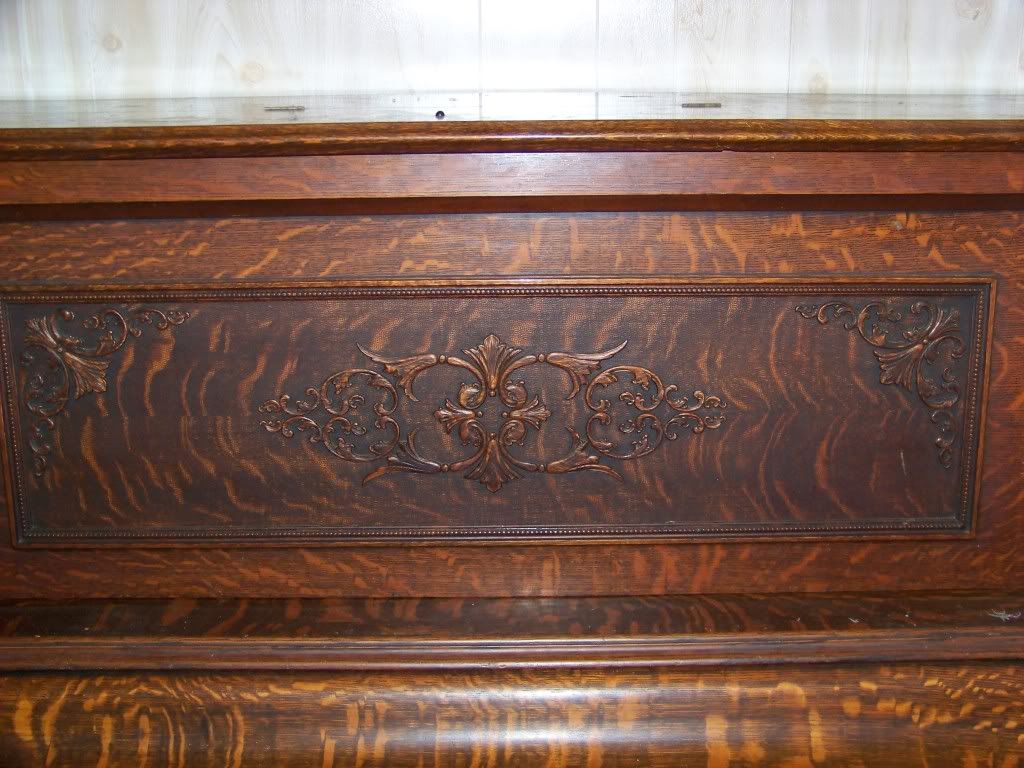
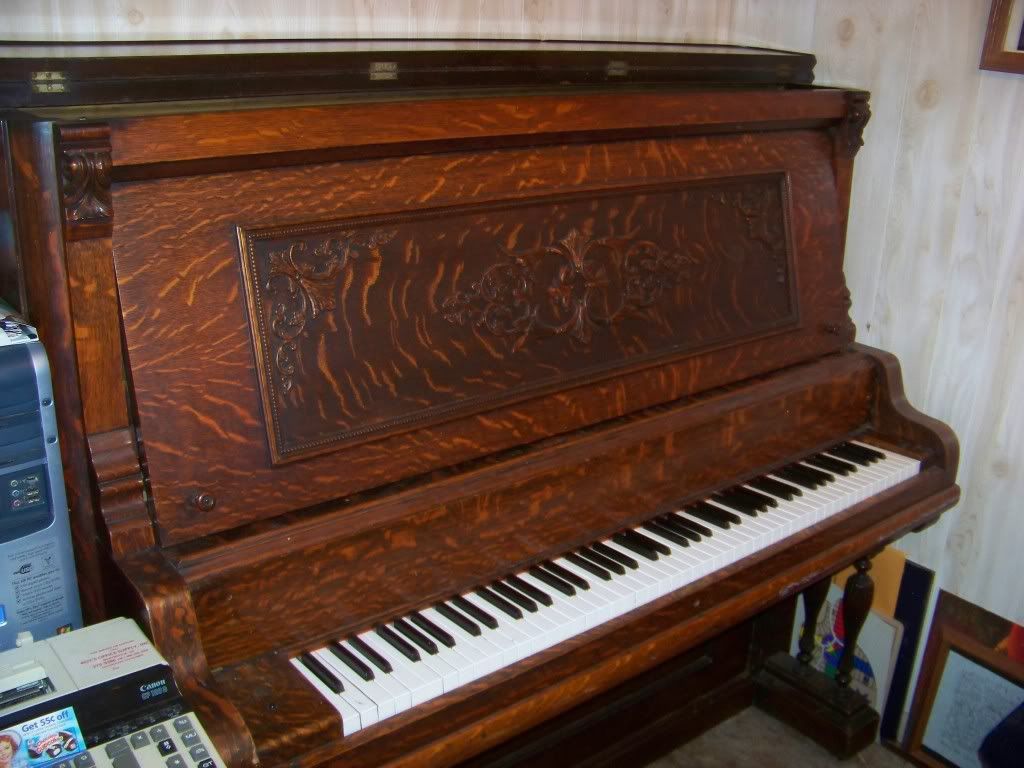
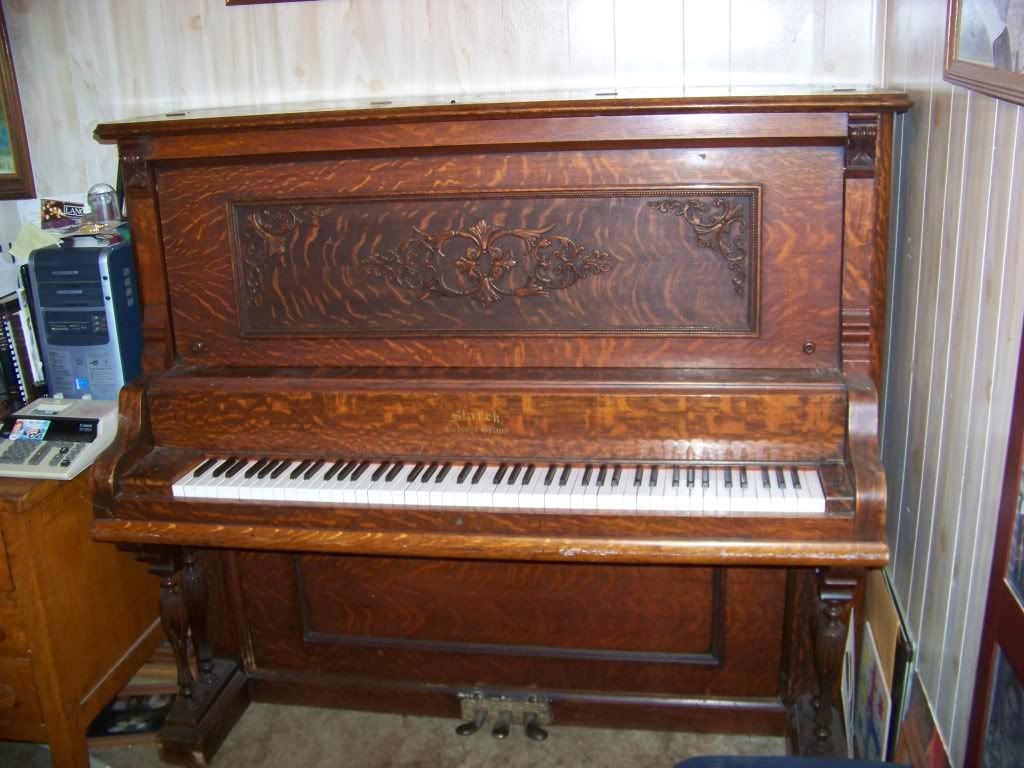
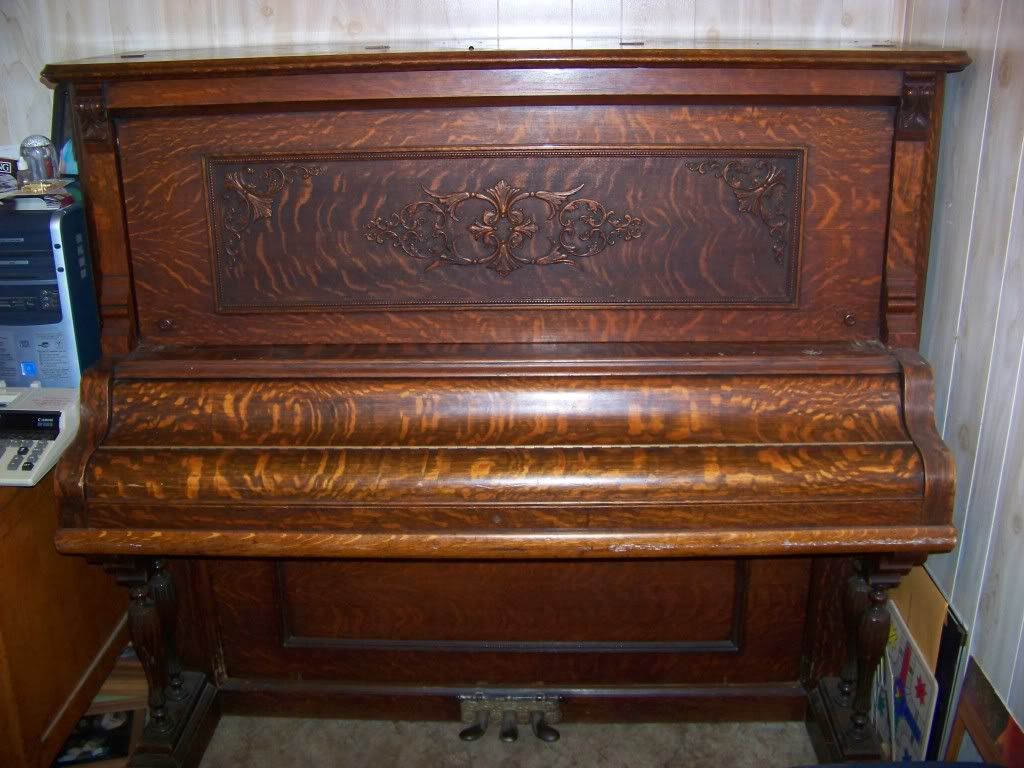
Ok, so i finally get the pics of My Starck uploaded.
Here it is. sorry, the pictures are a little big and the sides are a little cut off.

I wanted to get a picture of this 'engraving' ( guess that's what you would call it). in any case this is one of the things i love about this piano. The attention to detail is amazing. I love it when people take pride in there work and this is a great example.


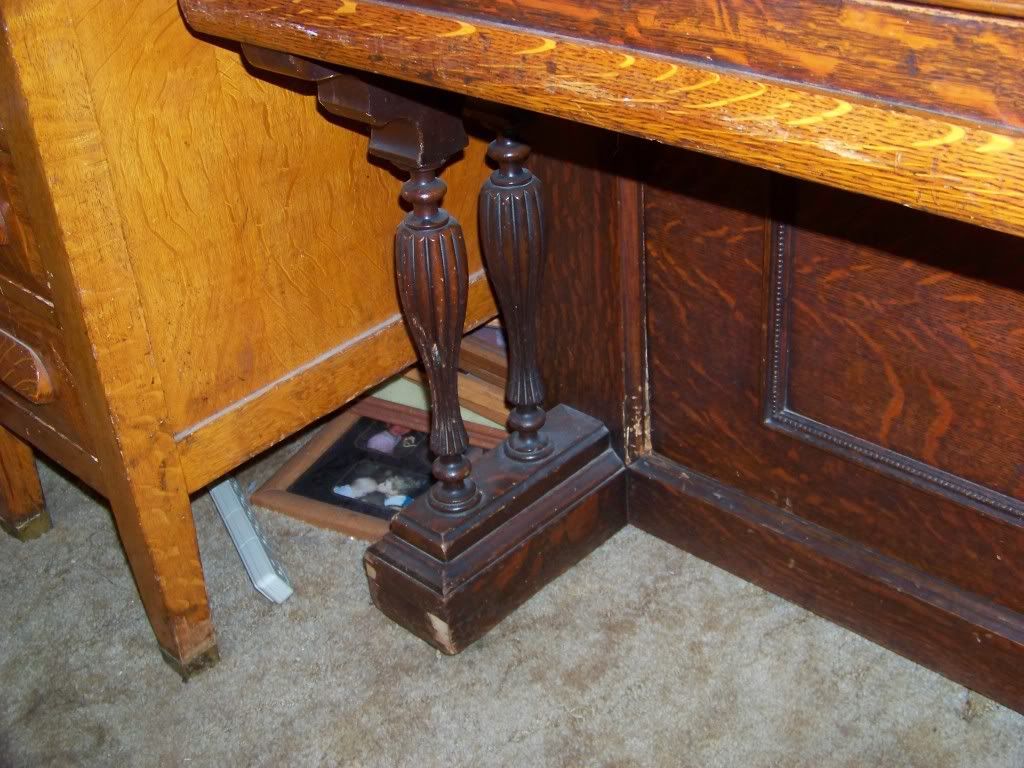
Also, the detail on the legs


Here it is. sorry, the pictures are a little big and the sides are a little cut off.

I wanted to get a picture of this 'engraving' ( guess that's what you would call it). in any case this is one of the things i love about this piano. The attention to detail is amazing. I love it when people take pride in there work and this is a great example.


Also, the detail on the legs


1969 Mirafone 186 BBb
1965 Conn 20J
Olds fiberglass Sousaphone Project- for sale
Epiphone Thunderbird Bass Guitar
Cremona 3/4 upright bass
1965 Conn 20J
Olds fiberglass Sousaphone Project- for sale
Epiphone Thunderbird Bass Guitar
Cremona 3/4 upright bass
- GC
- 5 valves

- Posts: 1800
- Joined: Fri Mar 19, 2004 5:52 am
- Location: Rome, GA (between Rosedale and Armuchee)
Re: lets talk pianos
I'm really fond of the pre-war Mason & Hamlin pianos. They were another excellent old brand that nobody remembers any more.
JP/Sterling 377 compensating Eb; Warburton "The Grail" T.G.4, RM-9 7.8, Yamaha 66D4; for sale > 1914 Conn Monster Eb (my avatar), ca. 1905 Fillmore Bros 1/4-size Eb, Bach 42B trombone
- Rick Denney
- Resident Genius
- Posts: 6650
- Joined: Mon Mar 22, 2004 1:18 am
- Contact:
Re: lets talk pianos
Ansel Adams, the photographer, trained as a concert pianist in the teens and 20's of the last century, before deciding to go with photography in about 1930. He and his father had jointly bought (on time) a Mason and Hamlin BB grand piano, in the early 20's. Being famous (as a photographer), his home in Carmel was visited by other celebrities, one of whom became a good friend: Vladimir Ashkenazy. Ashkenazy was not the only celebrity pianist to offer to buy that piano from Adams. But he never sold it, and I suspect his children still have it in that house.GC wrote:I'm really fond of the pre-war Mason & Hamlin pianos. They were another excellent old brand that nobody remembers any more.
By the way, the relief on that Stark is not an engraving. It is pressed scrollwork that is applied onto the flat panel. That was typical of Victorian furniture. I have a sideboard from the 1890's that was decorated with the same technique. Very, very few of the pianos made during the upright piano boom had fully hand-crafted cases, but, of course, now they would usually be secondary wood with a black finish for pianos intended for playing.
Rick "who has a book somewhere that discusses the prevailing manufacturers around the turn of the century" Denney
- sloan
- On Ice

- Posts: 1827
- Joined: Thu Mar 18, 2004 10:34 pm
- Location: Nutley, NJ
Re: lets talk pianos
I learned to play on a magnificent "Chickering" upright. When I left home, I carefully measured the entry to my new apartment and determined that there was no point in trying to move it. Eventually it was donated to a church, where I'm sure it has long since been worn out. I suppose I should go and check, some day...
For a few years, while in transition, I had another used upright of no particular value. It was OK, but it was obviously correct to throw it in with the sale of the house when we moved.
Instead of moving the Chickering, I walked into a store in Boston (in 1981) and asked for "the smallest piano you have" (see previous paragraph on measuring). The poor salesman kept trying to move me up a notch, but I didn't budge. I still have that tiny Baldwin (SPECIAL - End of Season Tanglewood SALE!). It's missing a small piece of "ivory" and hasn't been tuned in a decade - but it's still there. It was good enough for my son to start taking lessons on it. It survived his attempts at keyboard rock star.
Now he's moved out. But...before he moved, he got good. Really good. So, my living room is now graced by a tastefully small baby grand that cost about 4,000 times the purchase price of the Chickering. It's a very nice piano and it's plenty good enough for me. [note that the Chickering was purchased with 1957 dollars and the Kawai was purchased with 2000 dollars - so, the price difference isn't quite *that* much!]
but, some days I really miss that Chickering and will always regret that I didn't find a way to hold onto it.
For a few years, while in transition, I had another used upright of no particular value. It was OK, but it was obviously correct to throw it in with the sale of the house when we moved.
Instead of moving the Chickering, I walked into a store in Boston (in 1981) and asked for "the smallest piano you have" (see previous paragraph on measuring). The poor salesman kept trying to move me up a notch, but I didn't budge. I still have that tiny Baldwin (SPECIAL - End of Season Tanglewood SALE!). It's missing a small piece of "ivory" and hasn't been tuned in a decade - but it's still there. It was good enough for my son to start taking lessons on it. It survived his attempts at keyboard rock star.
Now he's moved out. But...before he moved, he got good. Really good. So, my living room is now graced by a tastefully small baby grand that cost about 4,000 times the purchase price of the Chickering. It's a very nice piano and it's plenty good enough for me. [note that the Chickering was purchased with 1957 dollars and the Kawai was purchased with 2000 dollars - so, the price difference isn't quite *that* much!]
but, some days I really miss that Chickering and will always regret that I didn't find a way to hold onto it.
Kenneth Sloan
-
DavidB
- bugler

- Posts: 34
- Joined: Sun Nov 30, 2008 9:29 pm
- Location: Richardson, TX
- Rick Denney
- Resident Genius
- Posts: 6650
- Joined: Mon Mar 22, 2004 1:18 am
- Contact:
Re: lets talk pianos
David, when it comes to who has the most impressive...equipment--you win.DavidB wrote:I like my M&H much better than the Bechstein in the foreground, which I've sold since the photo was taken. The European vs. American sound debate rages in the piano community as well as here with tubas. The Bechstein had a very clear, articulated, clean sound while the M&H sounds very thick and complex. And of course nothing beats the bass response on a 9'.
Regarding the German sound, quick story...
Ashkenazy came to San Antonio when I lived there to perform with the San Antonio Symphony. He arrived at the hall for the rehearsal, and discovered that the Baldwin provided by the symphony was "unplayable". So, a call went out to the little old ladies of the Symphony League, and one of them offered her 12-foot Bosendorfer Imperial. The Symphony paid to move it to the hall, tune it, use it for the performance, and then move it back and tune it again. That and insure it for the zillion bucks that's it's worth.
That Bosendorfer did not display the brittle clarity of German pianos that I've always heard about. It was more like the Power Sound that I've associated with German tubas--the Alexander of pianos. It positively roared.
Ashkenazy also publicly thanked the lady, by name, and asked her to take a bow. That was probably all the compensation she needed.
Rick "with two Ashkenazy stories in one thread" Denney
-
DavidB
- bugler

- Posts: 34
- Joined: Sun Nov 30, 2008 9:29 pm
- Location: Richardson, TX
-
Alex F
- 4 valves

- Posts: 798
- Joined: Fri Mar 19, 2004 12:39 am
- Location: Chicago
Re: lets talk pianos
Some of those old Chickering grands are legendary but the Chickering family essentially sold of their interest in the piano business in the 1920s. Chickerings continued to be made in Boston until roughly 1930 and then were made in the factories of American Aeolian, the piano "cyborg" (a la Conn-Selmer) which eventually snatched up brands such as Mason & Hamlin, Cable, and several others. Last I heard, Chickering is just a 'brand" ownded by Baldwin (Gibson). The pianos are made in China using desigsn bearing no relationship to old Chickering Boston designs.
Mason & Hamlin, after several corporate ownership changes, reorganizations, and re-engineerings, now make high quality pianos in Haverhill, MA. They have decided to focus on quality rather than quantity. If you buy a M&H grand, make sure your floor can handle it as they are far heavier than their Steinway comparisons.
As for me, I've got a Petrof P-III grand (6'3") made in the Czech Republic during Commie times. I bought it when they were just introducing them into the US. It's a great piano for the money, although today they are for more expensive than in the past. Petrof, after the fall of Communism, was re-privatised with ownership being returned to the Petrof family. The owners, with heavy investment from a US distrbutor (the same one that distribted Lidl tubas) decided to make the company the Eastern European Yamaha, opening up three piano factories in a short period a cranking out about 10K pianos per year. Unfortunately, this was at the time when the worldwide piano market hit the toilet. Last year, Petrof made only about 4,000 pianos, including 900 grands. There was also a major dispute between the Czech company and the US distributor, with litigation ensuing both in the US and in the EU. Petrof created its own US distribution company in Georgia (US) and the courts all ruled in favor of the Czech parent.
I've read that Petrof has re-tooled its cabinet factory in order to make kitchen furniture, cabinets, and shelving that will be sold through outlets such as IKEA. Petrof always got high marks for its woodwording so I guess this is one way to diversify.
Does that mean MW and Miraphone will be making lamps? Who knows.
Mason & Hamlin, after several corporate ownership changes, reorganizations, and re-engineerings, now make high quality pianos in Haverhill, MA. They have decided to focus on quality rather than quantity. If you buy a M&H grand, make sure your floor can handle it as they are far heavier than their Steinway comparisons.
As for me, I've got a Petrof P-III grand (6'3") made in the Czech Republic during Commie times. I bought it when they were just introducing them into the US. It's a great piano for the money, although today they are for more expensive than in the past. Petrof, after the fall of Communism, was re-privatised with ownership being returned to the Petrof family. The owners, with heavy investment from a US distrbutor (the same one that distribted Lidl tubas) decided to make the company the Eastern European Yamaha, opening up three piano factories in a short period a cranking out about 10K pianos per year. Unfortunately, this was at the time when the worldwide piano market hit the toilet. Last year, Petrof made only about 4,000 pianos, including 900 grands. There was also a major dispute between the Czech company and the US distributor, with litigation ensuing both in the US and in the EU. Petrof created its own US distribution company in Georgia (US) and the courts all ruled in favor of the Czech parent.
I've read that Petrof has re-tooled its cabinet factory in order to make kitchen furniture, cabinets, and shelving that will be sold through outlets such as IKEA. Petrof always got high marks for its woodwording so I guess this is one way to diversify.
Does that mean MW and Miraphone will be making lamps? Who knows.
- imperialbari
- 6 valves

- Posts: 7461
- Joined: Fri Mar 19, 2004 3:47 am
Re: lets talk pianos
This thread made me read about Bösendorfer again after maybe 40 years. But there was on great German brand more, which I don’t remember the name of. Neither Bechstein nor Steinweg. Somebody able to help me on that one?
It is interesting to read Bösendorfer tell that they buy the cast iron frame (but do the finishing themselves using 30 or 40 hours for that process on each frame). They also buy the repetition machine from a German maker. They consider all of the wood a resonance body, and that part of the making they do themselves.
Klaus
It is interesting to read Bösendorfer tell that they buy the cast iron frame (but do the finishing themselves using 30 or 40 hours for that process on each frame). They also buy the repetition machine from a German maker. They consider all of the wood a resonance body, and that part of the making they do themselves.
Klaus
-
Alex F
- 4 valves

- Posts: 798
- Joined: Fri Mar 19, 2004 12:39 am
- Location: Chicago
Re: lets talk pianos
Klaus,
I'm sure you are aware than "Steinweg" is the German form of "Steinway". When the Steinweg clan moved to the USA in the 1840s, the changed the name to Steinway. However, one brother stayed behind and, with Mr. Grotrian, started the piano company known as Grotrian Steinweg. Eventually, this brother also left Germany to join his family but pianos contined to be made under the Steinweg name.
To add to the confusion, Steinway & Sons set up a piano factory in Hamburganos under the S&S name.
In the early 1970s, Steinway &Sons sued Steinweg in the US. Pursuant to a cnsent decree resolving the matter, Steinweg was prohibited from selling pianos in the US undere the Steinweg anme and can only sell these pianos under the Grotrian name.They are, nonetheless, fine pianos equal in quality to Steinway products. A goood friend own a Grotrian (Steinweg) and I love to play here instrument. a Hamburg Steinway in the US now but you better have serious amounts of Money.
Bluthner is also a very fine German brand. There are not too many of them here in the US but they have an very clear but not thunderous sound.
Like many other German companies, bluthner now has subsidiary companies making pianos in places like PolandI believe they use the name vogel and betting.
*Sorry: either Tubenet or my computer is acting crazy. I'm going to post this so I don't lose it but will have to come back and clean it up. There is almost a five second delay in recording my keystrokes. and it's getting aggravating.)\
For many years, you could not legally purchase a European Steinway in the US. Haburg designs are slightly different from the New York modles and the pianos, while at a quality equal to their NY cousins, do sound somehwat different.
I'm sure you are aware than "Steinweg" is the German form of "Steinway". When the Steinweg clan moved to the USA in the 1840s, the changed the name to Steinway. However, one brother stayed behind and, with Mr. Grotrian, started the piano company known as Grotrian Steinweg. Eventually, this brother also left Germany to join his family but pianos contined to be made under the Steinweg name.
To add to the confusion, Steinway & Sons set up a piano factory in Hamburganos under the S&S name.
In the early 1970s, Steinway &Sons sued Steinweg in the US. Pursuant to a cnsent decree resolving the matter, Steinweg was prohibited from selling pianos in the US undere the Steinweg anme and can only sell these pianos under the Grotrian name.They are, nonetheless, fine pianos equal in quality to Steinway products. A goood friend own a Grotrian (Steinweg) and I love to play here instrument. a Hamburg Steinway in the US now but you better have serious amounts of Money.
Bluthner is also a very fine German brand. There are not too many of them here in the US but they have an very clear but not thunderous sound.
Like many other German companies, bluthner now has subsidiary companies making pianos in places like PolandI believe they use the name vogel and betting.
*Sorry: either Tubenet or my computer is acting crazy. I'm going to post this so I don't lose it but will have to come back and clean it up. There is almost a five second delay in recording my keystrokes. and it's getting aggravating.)\
For many years, you could not legally purchase a European Steinway in the US. Haburg designs are slightly different from the New York modles and the pianos, while at a quality equal to their NY cousins, do sound somehwat different.
- ken k
- 6 valves

- Posts: 2372
- Joined: Sun Mar 21, 2004 11:02 pm
- Location: out standing in my field....
Re: lets talk pianos
I have probably the smallest piano I have ever seen, a very small apartment spinet model by Abard. It is a full 88 keys but only about 40" tall and the keyboard just sticks out of the body with no legs on the front. I will take a picture and post this weekend. Unique but not necessarily in a good way! I am not a real pianist and would never play in public but this instrument serves me well in my arranging and theory projects.
We actually got the instrument for free when my inlaws purchased their neighbor's summer house at Cedar Lake in Denville NJ. It had belonged to William (?) Herman who was choir director at Wellesley College in MA back in the 60's - 70's and also had many editions of choral pieces published. He used to keep a light bulb lit iniside the piano all winter while the house sat empty and cold.
ken k
We actually got the instrument for free when my inlaws purchased their neighbor's summer house at Cedar Lake in Denville NJ. It had belonged to William (?) Herman who was choir director at Wellesley College in MA back in the 60's - 70's and also had many editions of choral pieces published. He used to keep a light bulb lit iniside the piano all winter while the house sat empty and cold.
ken k
B&H imperial E flat tuba
Mirafone 187 BBb
1919 Pan American BBb Helicon
1924 Buescher BBb tuba (Dr. Suessaphone)
2009 Mazda Miata
1996 Honda Pacific Coast PC800
Mirafone 187 BBb
1919 Pan American BBb Helicon
1924 Buescher BBb tuba (Dr. Suessaphone)
2009 Mazda Miata
1996 Honda Pacific Coast PC800