isometric strength (??)
-
Three Valves
- 6 valves

- Posts: 4230
- Joined: Wed Jan 07, 2015 9:44 am
- Location: With my fellow Thought Criminals
Re: isometric strength (??)
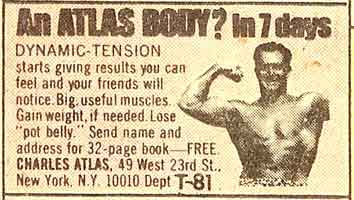
I think you have confused isometric strength with Dynamic Tension!!
I am committed to the advancement of civil rights, minus the Marxist intimidation and thuggery of BLM.
-
tofu
- 5 valves

- Posts: 1998
- Joined: Sun Mar 21, 2004 11:59 pm
- Location: One toke over the line...
Re: isometric strength (??)
bloke wrote:First...
- I am a big fat slob.

Please tell us something we don't already know.
Pretty sure we all agree.- I know NOTHING
 Don't ya love editing!
Conditioning helps in most endeavors in life. Certainly makes life easier playing the tuba and just getting through the day. I've done sports all my life and worked out on a daily basis since being a kid -football/basketball/baseball/hockey back then & now running, biking, swimming, serious weightlifting (power lifting), stretching/yoga etc. While I can certainly hold most horns I do use a stand for the largest/balkiest ones. One reason is I like the resonance it provides versus having that deadened by being against some part of my body. Not sure that is useful for the sound out to the audience though.I wonder (??) if some isometric strength exercises (inner thigh muscles...?? back muscles...?? arm muscles...?? other muscle groups...??) would help some players be able to play more different shapes and sizes of tubas without using stands (or without rejecting those tubas out of hand, as they believe they are simply unable to hold and play those particular tubas).
More importantly one of the things I took away from the masterclasses I attended of Arnold Jacobs @ NU way back was not having any tension in the body while playing. If I have to tense muscles to hold a horn that is going to probably lead to constriction of other muscles in the body including the throat. My goal is to always play as relaxed as possible. The thing I find most useful for my playing from an exercise perspective is swimming (while the breathing is different) I find doing say 2500 yards several hours before a concert really opens up the lungs (able to more quickly take in air and a larger quantity - I would compare it to the difference between dry valves and then oiling them ) and it also really relaxes the entire body.
-
Salazarsam33
- bugler

- Posts: 170
- Joined: Fri Dec 25, 2015 10:51 pm
Re: isometric strength (??)
since this may be my cup of tea...
muscle contraction can be divided in concentric (lift a weight) and eccentric (lower it).
concentric muscle contractions can be divided into "isometric" (iso-same,metric-length) with is what happens when you "flex" or hold something, there is muscle contraction, but the fibers dont change their length = no movement.
the other form is called "isotonic" (meaning same tone) this is the classic contraction of muscle lifting and moving the bodies limbs to produce movement, like lifting a beer towards your mouth.
the trick lies in the muscle fibers, there are different types, and simply put it, certain muscles have endurance fibers (back, calves, shoulder, mostly all posture muscles to hold our posture all day. the other fibers are fast fibers. these are abundant on the fingers and arms to produce quick and precise movements (like fingering for the carnaval of venice).
the thing about holding a tuba is that sometimes we use our arms and other muscles that arent meant for endurance to hold a certain posture that fatiges the fast fibers.
certain exercises can help certain muscles to grow and transform the fast fibers into endurance fibers.
and yes, tension, or muscle contraction, lead to less blood in the muscle that cause tension. something Oysten baadsvik mention in a master class i had with him about warming up with long tones (not recommended to get blood working to the lip muscles due to continuous tension of long notes)
so workout, stretch and maintain a good routine of exercise with your playing.
-Sam
muscle contraction can be divided in concentric (lift a weight) and eccentric (lower it).
concentric muscle contractions can be divided into "isometric" (iso-same,metric-length) with is what happens when you "flex" or hold something, there is muscle contraction, but the fibers dont change their length = no movement.
the other form is called "isotonic" (meaning same tone) this is the classic contraction of muscle lifting and moving the bodies limbs to produce movement, like lifting a beer towards your mouth.
the trick lies in the muscle fibers, there are different types, and simply put it, certain muscles have endurance fibers (back, calves, shoulder, mostly all posture muscles to hold our posture all day. the other fibers are fast fibers. these are abundant on the fingers and arms to produce quick and precise movements (like fingering for the carnaval of venice).
the thing about holding a tuba is that sometimes we use our arms and other muscles that arent meant for endurance to hold a certain posture that fatiges the fast fibers.
certain exercises can help certain muscles to grow and transform the fast fibers into endurance fibers.
and yes, tension, or muscle contraction, lead to less blood in the muscle that cause tension. something Oysten baadsvik mention in a master class i had with him about warming up with long tones (not recommended to get blood working to the lip muscles due to continuous tension of long notes)
so workout, stretch and maintain a good routine of exercise with your playing.
-Sam
Wisemann C
BMB F
BMB F
-
oedipoes

- 4 valves

- Posts: 765
- Joined: Wed Mar 26, 2008 3:47 pm
- Location: Belgium
Re: isometric strength (??)
Can you illustrate this position for a 3+1 tuba with a sketch or picture?bloke wrote: MOST OF THE TIME, though, I can hold and play MOST tubas and without any issues. When I play 3+1 tubas, I rest them on my left leg (I don't see others do this, but whatever) and (though this strategy may seem odd to others) this works just fine for me, and the left hand "reach" problem becomes "not a problem at all".
When mouthpipe tubes seem "low", I'll change the spacing of my legs, change the angle of the tuba, and/or lean forward just a bit. When mouthpipe tubes seem "high", I'll change those same things, except (probably) sit up just a bit.
Most of the time my problem with holding tubas is in the distance between the mouthpiece and the contact point with my legs (bottom bow).
On most tubas, this is bigger than the distance between my mouth and the top of my chair. (I'm 1.75m)
That means that the bottom bow needs to be way below the top of my legs, which means that it can not 'rest' there, but needs to be clamped 100% between the legs, which is not feasible for longer times.
Conclusion:
If the mouthpiece-bottom bow distance on my Rudy 4/4 would be more like on my Norwegian Star (= smaller), I would probably not need a stand for the Rudy.
I'm currently successfully using a BBC stand on the Rudy, and only a sheet of drawer liner on top of my legs for the Norwegian Star.
Works fine.