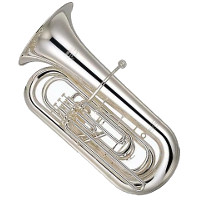
Rotary valves and rotating direction

The bulk of the musical talk
User avatar
P@rick
bugler
bugler
Posts: 209
Joined: Wed Feb 28, 2007 5:00 am
Location: The Netherlands

Rotary valves and rotating direction

Post by P@rick »

Hi all,
Someone who doesn't play an instrument showed some interest in my tuba (with rotary valves) and how it all works. He had a question which I could not answer or think of any reason why it is like that.

The question was:"Why do the valves rotate in a different direction" :?:

So, why do rotary valves (especially when you have 4 or 5 valve configurations which are inline) rotate in a different direction? Why not all clockwise or all counterclockwise instead :?:

Thanks!
NCSUSousa
3 valves
3 valves
Posts: 365
Joined: Mon Mar 25, 2013 8:55 am
Location: Probably goofing off at work - in Chapel Hill, NC
Contact:

Re: Rotary valves and rotating direction

Post by NCSUSousa »

Some manufacturers (Miraphone, Wessex) do 'same direction' rotation by default on their new rotary instruments.
Most others stick with what I'll call the original rotary layout where valves 3&4 rotate clockwise when pressed, but 1&2 rotate anti-clockwise when pressed.
BBb Tuba with 4 Rotors -
TE-2110 (2009) + TE Rose
Mack 210 (2011) + Bruno Tilz NEA 310 M0
G. Schneider (Made in GDR, 1981?) + Conn Helleberg 120S
I earn my living as an Electrical Engineer - Designing Power systems for buildings
User avatar
tbonesullivan
4 valves
4 valves
Posts: 531
Joined: Mon Oct 31, 2016 12:30 pm
Location: New Jersey

Re: Rotary valves and rotating direction

Post by tbonesullivan »

Someone needs to explain to me the new "TWIN VALVE" design from S.E. Shires trombone first.

Twin valve
Our newly-patented valve design utilizes two valves, which each simultaneously move counter to each other allowing air flow to bend 90 degrees instead of the traditional 120. This more gradual bending of the air allows the valve to feel incredibly open and stable while being able to achieve a depth of sound characteristic of larger valves. This valve features quick, light action and a short throw. The Shires Twin Valve is our latest endeavor in creating a state-of-the-art orchestral trombone.

That said, when Yamaha put out their YBL-830 bass, one of the "features" was different rotation directions than standard, and many people have their Duo Gravis bass trombones modified for a different rotor direction.
Yamaha YBB-631S BBb Tuba, B&H Imperial Eb Tuba, Sterling / Perantucci 1065GHS Euphonium
Yamaha YBL-621 RII Bass Trombone and a bunch of other trombones
User avatar
tbonesullivan
4 valves
4 valves
Posts: 531
Joined: Mon Oct 31, 2016 12:30 pm
Location: New Jersey

Re: Rotary valves and rotating direction

Post by tbonesullivan »

I guess I really need to see what they look like inside. I can't really get my head around how the air goes through. I guess each is like HALF a rotor in a way?

Nope. brain still isn't working.
Yamaha YBB-631S BBb Tuba, B&H Imperial Eb Tuba, Sterling / Perantucci 1065GHS Euphonium
Yamaha YBL-621 RII Bass Trombone and a bunch of other trombones
User avatar
Art Hovey
pro musician
pro musician
Posts: 1508
Joined: Sun May 02, 2004 12:28 am
Location: Connecticut

Re: Rotary valves and rotating direction

Post by Art Hovey »

... allowing air flow to bend 90 degrees instead of the traditional 120."
??
Every conventional rotary valve that I have ever seen bends the air flow 90 degrees.
In a conventional German-style tuba air flows downward to enter the first valve and exits horizontally into the first valve tubing when the paddle is depressed.
Some fancy trombone valves bend it 60 degrees, but I have never seen one that bends it 120.
With pistons the bend is usually about 60 degrees, but with a twist, as with the fancy conical trombone rotors.
User avatar
Doug Elliott
pro musician
pro musician
Posts: 613
Joined: Wed Nov 12, 2008 8:59 pm

Re: Rotary valves and rotating direction

Post by Doug Elliott »

The Shires valve is small and has only one passageway, not two. There are three ports, so the air goes in one and out either one of the others.
User avatar
P@rick
bugler
bugler
Posts: 209
Joined: Wed Feb 28, 2007 5:00 am
Location: The Netherlands

Re: Rotary valves and rotating direction

Post by P@rick »

bloke wrote:...to more easily enable the finger paddles to be grouped close-enough together to accommodate a typical human hand...
This crossed my mind, but I don't think that a (nowadays) manufacturing process for valves, which would rotate in the same direction and still have paddles closely grouped, is more complicated or expensive compared to have them rotating in different directions. I think you would have less different parts (more identical parts), because most of the valve system is symmetrical.
I could be mistaking, so are there examples of designs where the valves (for Tubas) rotate in the same direction? I googled, but could not find any.

How about the "play and feel"? Is the valve direction of no influence at all? I ask because some valves rotate "towards" the air flow, other valves rotate "away" from the air flow when you press the paddle.
User avatar
KingBassTrombone
bugler
bugler
Posts: 92
Joined: Mon Dec 11, 2017 3:45 pm
Location: Toledo, OH or Fremont, OH

Re: Rotary valves and rotating direction

Post by KingBassTrombone »

The rotation of the rotary valve impacts the slur articulation of that valve. A valve which rotates counterclockwise (set up as rotors typically are in rotary tubas) will engage the extra tubing without directly interrupting the column of air. A very smooth legato articulation can be achieved with the valve. A valve which rotates clockwise will have a much harsher articulation because the bridge between the channels of the rotor itself must cross the incoming air stream while engaging the extra tubing. The resulting articulation is a much more solid articulation more akin to a tenudo than a legato. In some cases, you can audibly hear the valve cutting the air stream with a small "tph" sound making the articulation.

The best way to experience this difference is to blow just air through your horn, then press one valve of each direction. You'll feel and hear the difference in articulation. The CCW valve will have almost no audible sound and very little feedback. The CW valve will "pop" the articulation and you'll feel the air column get interrupted by the valve internals. That's why some tubists (and bass trombonists) chase the idea of having all the rotors turn the same way- consistency of articulation and blow.
User avatar
tbonesullivan
4 valves
4 valves
Posts: 531
Joined: Mon Oct 31, 2016 12:30 pm
Location: New Jersey

Re: Rotary valves and rotating direction

Post by tbonesullivan »

This video does a pretty good job of showing the internal rotor structure. I should also note that the orientation of the valve and valve tubing changes whether you want CCW or CW rotation. On a trombone with an F attachment, the valve tubing is on the opposite side from a tuba, so the Clockwise rotation is desired. Due to how the linkages work, it was much easier to make the second valve in an independent bass trombone rotate the opposite direction.

I should note that in the video, the "conventional model" they are comparing the YBL-830 to is its predecessor, the YBL-613H.

https://youtu.be/R93fvioIZ28?t=118" target="_blank" target="_blank
Yamaha YBB-631S BBb Tuba, B&H Imperial Eb Tuba, Sterling / Perantucci 1065GHS Euphonium
Yamaha YBL-621 RII Bass Trombone and a bunch of other trombones
User avatar
P@rick
bugler
bugler
Posts: 209
Joined: Wed Feb 28, 2007 5:00 am
Location: The Netherlands

Re: Rotary valves and rotating direction

Post by P@rick »

KingBassTrombone wrote:The rotation of the rotary valve impacts the slur articulation of that valve. A valve which rotates counterclockwise (set up as rotors typically are in rotary tubas) will engage the extra tubing without directly interrupting the column of air. A very smooth legato articulation can be achieved with the valve. A valve which rotates clockwise will have a much harsher articulation because the bridge between the channels of the rotor itself must cross the incoming air stream while engaging the extra tubing. The resulting articulation is a much more solid articulation more akin to a tenudo than a legato...
A good explanation! A agree that it makes a difference, but Bloke just made me realize that it does not matter for Tuba...

bloke wrote:...Rotary valves rotate two ways. After they rotate one way first, they rotate the other way next.
I didn't think of that myself, but it absolutely makes sense. The valves rotate in both direction so it basically does not matter much from what rotary direction you start...you also have to come back and rotate the other way to play the other note...

bloke wrote:It’s not my job in my life to try to convince people - who believe things that I don’t believe - to believe the way that I believe.
You can call it "convince people", but I call it sharing facts or opinions. I like to hear both and that's what makes this forum great. Keep "convincing" :wink:
tadawson
bugler
bugler
Posts: 36
Joined: Sat Nov 02, 2019 12:23 pm
Location: Houghton, MI

Re: Rotary valves and rotating direction

Post by tadawson »

The other thing I note is that you don't play through just one port on a valve! No matter which direction it turns, one of the two ports is going to have the rotor web crossing over it . . .
NCSUSousa
3 valves
3 valves
Posts: 365
Joined: Mon Mar 25, 2013 8:55 am
Location: Probably goofing off at work - in Chapel Hill, NC
Contact:

Re: Rotary valves and rotating direction

Post by NCSUSousa »

I gave 2 example companies to look at in my previous post who make their rotary tubas this way. Google is not your friend at this level of detail.
P@rick wrote: I googled, but could not find any.
Here's an image Wessex (source https://wessex-tubas.com/collections/cc ... hler-tc470):
Image
Note that ALL of the rotary valves will spin in the same direction (even the 5th valve) on this design.

Here's an image from Miraphone (source https://www.miraphone.de/instruments/tu ... valves-307):
Image

Does it really make slurring easier? There are already enough posts on that topic.
BBb Tuba with 4 Rotors -
TE-2110 (2009) + TE Rose
Mack 210 (2011) + Bruno Tilz NEA 310 M0
G. Schneider (Made in GDR, 1981?) + Conn Helleberg 120S
I earn my living as an Electrical Engineer - Designing Power systems for buildings
User avatar
P@rick
bugler
bugler
Posts: 209
Joined: Wed Feb 28, 2007 5:00 am
Location: The Netherlands

Re: Rotary valves and rotating direction

Post by P@rick »

NCSUSousa wrote:I gave 2 example companies to look at in my previous post who make their rotary tubas this way. Google is not your friend at this level of detail.
P@rick wrote: I googled, but could not find any.
Here's an image Wessex ...Here's an image from Miraphone...
Thanks for sharing!
User avatar
Art Hovey
pro musician
pro musician
Posts: 1508
Joined: Sun May 02, 2004 12:28 am
Location: Connecticut

Re: Rotary valves and rotating direction

Post by Art Hovey »

A valve which rotates clockwise will have a much harsher articulation because the bridge between the channels of the rotor itself must cross the incoming air stream while engaging the extra tubing. The resulting articulation is a much more solid articulation more akin to a tenudo than a legato. In some cases, you can audibly hear the valve cutting the air stream with a small "tph" sound making the articulation.
When I hear that "tph" sound on my rotary-valve tuba I know it's time to clean the sludge out of that valve. When it's all cleaned out I can blow through the tuba while moving each valve paddle and feel no difference between the clockwise and the counter-clockwise rotors.

I suspect that the origin of this urban legend is the fact that engaging the third or fourth valve suddenly puts a lot more air into motion than doing so with the first or second valve, because of the longer valve tubing. That extra air has extra inertia. Maybe some folks are sensitive enough to feel the difference, and perhaps they mistakenly attribute it to the difference in rotation direction.

I am still trying to figure out whether the author means clockwise as viewed from the front, or from the back of the tuba. Does anybody know?
NCSUSousa
3 valves
3 valves
Posts: 365
Joined: Mon Mar 25, 2013 8:55 am
Location: Probably goofing off at work - in Chapel Hill, NC
Contact:

Re: Rotary valves and rotating direction

Post by NCSUSousa »

Art Hovey wrote: I am still trying to figure out whether the author means clockwise as viewed from the front, or from the back of the tuba. Does anybody know?
I don't see that the author of the 1st post specified. Since my response did specify, I'll give my opinion.

I've always treated CW/CCW rotation as viewed from the audience, not the player or the linkage. Trying to view it any other way can get confusing since the valve linkages don't always face the same way depending on which hand operates the 5th valve:
Here's an older Miraphone 186 with a left-hand 5th valve (and the old style 3rd/4th valves):
Image
If anyone cares, it's for sale in Durham, NC (not mine to sell and I don't work for the guys selling it).

There are also oddities like this one from Alexander that's got a valve setup more like a Horn:
Image
I haven't seen one of these up close to know which way it rotates.
BBb Tuba with 4 Rotors -
TE-2110 (2009) + TE Rose
Mack 210 (2011) + Bruno Tilz NEA 310 M0
G. Schneider (Made in GDR, 1981?) + Conn Helleberg 120S
I earn my living as an Electrical Engineer - Designing Power systems for buildings
User avatar
P@rick
bugler
bugler
Posts: 209
Joined: Wed Feb 28, 2007 5:00 am
Location: The Netherlands

Re: Rotary valves and rotating direction

Post by P@rick »

NCSUSousa wrote:
Art Hovey wrote: I am still trying to figure out whether the author means clockwise as viewed from the front, or from the back of the tuba. Does anybody know?
I don't see that the author of the 1st post specified. Since my response did specify, I'll give my opinion.
My question was about the difference in directions of the valves and why. Most Tuba models have (had) mixed valve directions and that was my point.

But for the question "what is clockwise" for a valve? In my opinion, you should look to the valve from the side where the linkage is attached, regardless what the front and back from the Tuba is.
Post Reply